Bergamo is one of those Italian cities that feels calm, elegant, and quietly unforgettable. It does not shout for attention like Rome, Venice, or Florence, but once you walk through its old streets, look across its hills, and sit in a small café with a local pastry, it becomes easy to understand why travelers fall in love with it.
Located in Lombardy, not far from Milan, Bergamo offers a beautiful mix of medieval charm, mountain views, rich food, and local life. The city is often described through its two main parts: Città Alta, the historic upper town, and Città Bassa, the modern lower town. Together, they create a destination that feels both timeless and easy to enjoy.
For visitors who want more than a quick photo stop, Bergamo is full of meaningful details. Its stone lanes, old gates, quiet corners, scenic walls, and traditional dishes give the city a warm personality. This guide explores the beautiful streets, best views, and local secrets that make Bergamo worth visiting.
BIO
| Label | Information |
|---|---|
| Name | Bergamo |
| Country | Italy |
| Region | Lombardy |
| Type | Historic city |
| Famous For | Città Alta and Venetian Walls |
| UNESCO Status | Venetian Walls are UNESCO-listed |
| Main Attraction | Piazza Vecchia |
| Best Viewpoint | San Vigilio Hill |
| Local Cuisine | Casoncelli and polenta |
| Ideal Visit Length | 1–3 days |
| Best Time to Visit | Spring and autumn |
| Travel Style | Culture, history, and food |
| Nearby Destination | Milan and Lake Iseo |
Why Visit Bergamo
Bergamo is perfect for travelers who enjoy history, architecture, food, and peaceful city walks. It has the beauty of a classic Italian destination, but with a more relaxed feeling. You can explore historic squares, ride the funicular, walk beside ancient walls, and enjoy mountain air without feeling rushed.
The city is also easy to reach, especially for travelers arriving in northern Italy. Many people pass through Bergamo because of its airport, but the city deserves more than a short stop. Spending even one or two days here can reveal a side of Italy that feels authentic, elegant, and deeply memorable.
What makes Bergamo special is its balance. It has grand landmarks, but also small everyday pleasures. A quiet alley, a bakery window, a sunset view, or the sound of footsteps on cobblestones can become part of the experience.
The Heart of Bergamo
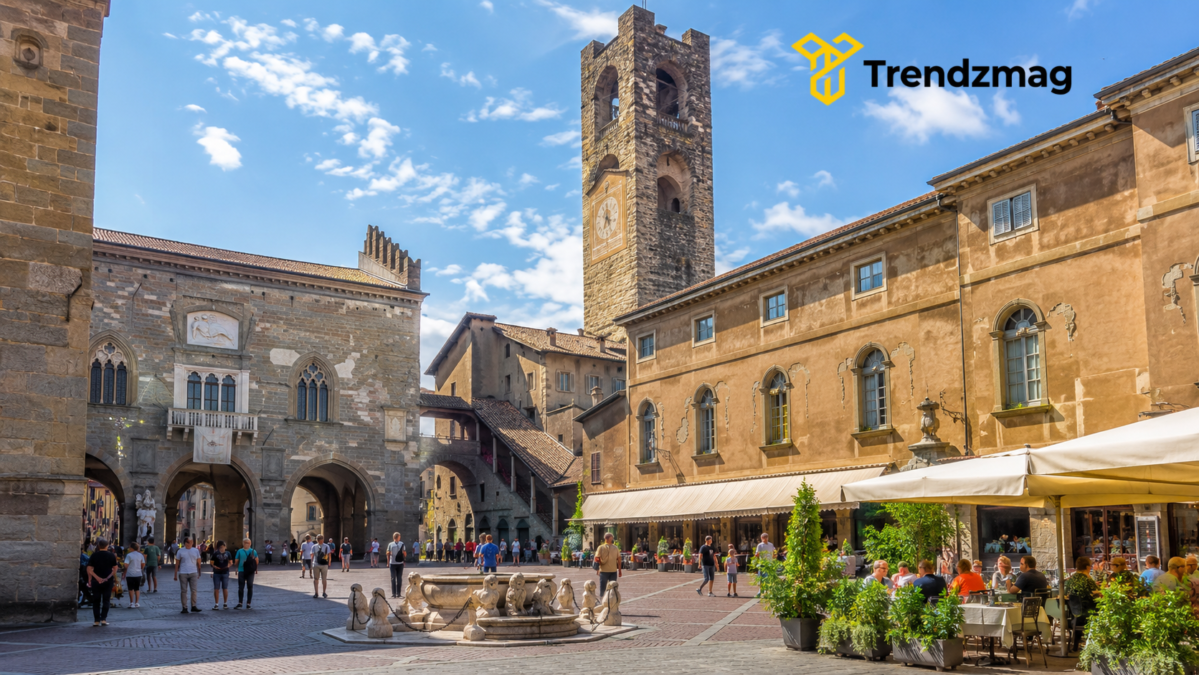
The historic heart of Bergamo is Città Alta, the upper town. Sitting on the hills above the lower city, it is surrounded by impressive Venetian walls and filled with narrow streets, old buildings, and charming squares.
Walking through Città Alta feels like stepping into another time. The streets are paved with stone, the buildings carry centuries of history, and many corners open into small views across rooftops and hills. It is a place made for slow walking rather than rushing.
The most famous square is Piazza Vecchia, often considered one of the most beautiful public spaces in northern Italy. Around it, you will find historic buildings, elegant architecture, and a calm atmosphere that makes it ideal for sitting with a coffee and watching the city move around you.
Nearby, visitors can see religious and cultural landmarks that show Bergamo’s artistic depth. The area around the square includes beautiful churches, detailed façades, and centuries of local heritage. Even if you are not a history expert, the atmosphere is easy to feel.
The Venetian Walls
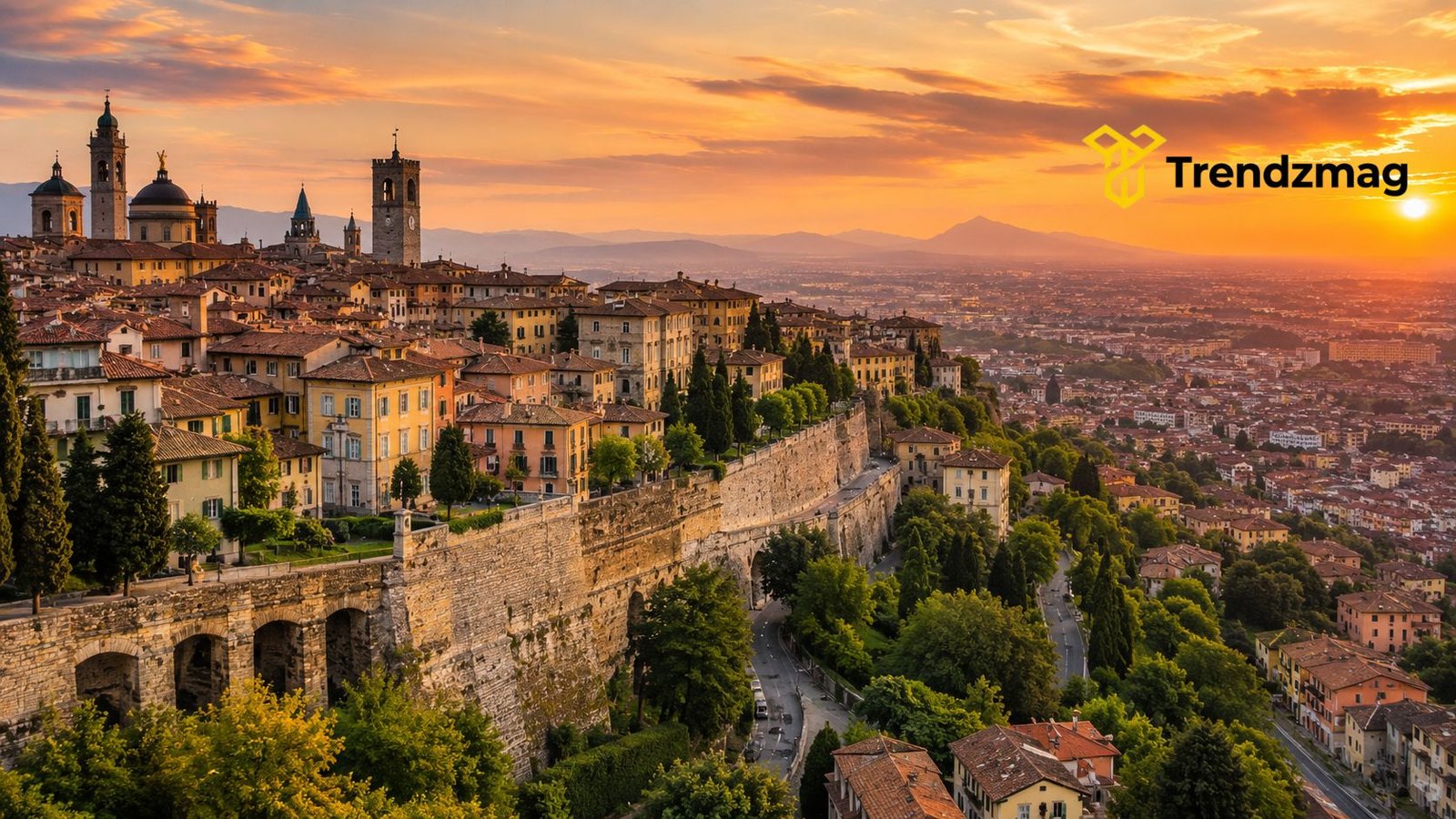
One of the most important features of Bergamo is its Venetian Walls. These walls were built during the period of Venetian rule and still protect the upper town today. They are not only historic structures but also one of the best places to enjoy wide views of the city.
The walls were recognized as part of a UNESCO World Heritage site connected to Venetian defense works from the 16th and 17th centuries. Their value comes from both their military design and their strong visual presence in the landscape.
For visitors, the walls offer a beautiful walking route. You can stroll along the ramparts, pass through old gates, and look out toward the lower city, surrounding countryside, and distant mountains. The experience is especially lovely in the late afternoon when the light becomes softer.
One of the most photographed spots is Porta San Giacomo, a bright stone gate that creates a dramatic entrance into Città Alta. From here, the view is elegant and open, making it a favorite stop for travelers and photographers.
Beautiful Streets
Bergamo’s beauty is found in its streets. In Città Alta, the lanes are narrow, curved, and full of character. Many are lined with stone buildings, small shops, traditional cafés, and historic doorways.
Via Gombito is one of the best-known streets in the upper town. It connects important parts of Città Alta and is filled with shops, restaurants, and local life. It can be lively, but it still keeps an old-world charm.
The smaller side streets are just as rewarding. Some lead to quiet courtyards, hidden viewpoints, or small churches. Others simply offer the pleasure of wandering without a strict plan. In Bergamo, getting slightly lost is often part of the experience.
Città Bassa also has its own charm. The lower town is more open, elegant, and modern, with wider streets, shops, cafés, and daily city energy. It gives Bergamo balance, showing that the city is not only a preserved historic place but also a living Italian city.
Best Views
Bergamo is a city of views. Because Città Alta sits above the lower town, many places offer beautiful panoramas. The Venetian Walls are the easiest and most popular viewpoint, especially for first-time visitors.
For a higher perspective, many travelers continue toward San Vigilio, a hill above Città Alta. It can be reached by another funicular or by walking, depending on your energy and time. From there, the views stretch over the rooftops, hills, and plains around Bergamo.
Sunset is one of the best times to enjoy the city. The rooftops glow warmly, the walls catch the light, and the lower city begins to shine below. It is a peaceful moment that shows Bergamo at its most romantic.
Photographers will find many strong angles here: old gates, stone paths, church towers, mountain backdrops, and street scenes. But even without a camera, the views are worth slowing down for.
Local Secrets
The best way to enjoy Bergamo is to look beyond the main attractions. While Piazza Vecchia and the Venetian Walls are essential, the city’s quieter corners often leave the strongest impression.
Small courtyards, hidden stairways, peaceful gardens, and less crowded churches can be found throughout the upper town. These places show a softer side of Bergamo, away from the busiest visitor routes.
One simple local secret is to walk early in the morning. Before the streets become busier, Città Alta feels calm and almost private. The light is gentle, shopkeepers begin opening their doors, and the city slowly wakes up.
Another good idea is to explore in the evening. After day visitors leave, Bergamo becomes quieter and more atmospheric. The lamps, old walls, and narrow lanes create a warm and intimate mood.
Food in Bergamo
Food is a major part of the Bergamo experience. The city’s cuisine is hearty, traditional, and connected to the surrounding region. It is not overly fancy, but it is full of comfort and character.
One of the most famous local dishes is casoncelli alla bergamasca. These are stuffed pasta, often served with butter, sage, pancetta, and cheese. The flavor is rich, satisfying, and deeply tied to local tradition.
Polenta is another important part of Bergamo’s food culture. In this region, polenta is more than a side dish. It appears in savory meals and also inspires local sweets.
A famous dessert is polenta e osei, a sweet cake designed to look like a traditional polenta dish with little birds. It is colorful, distinctive, and closely associated with Bergamo’s pastry tradition.
For a relaxed local experience, stop for coffee, pastries, or aperitivo in Città Alta or Città Bassa. Small cafés and bakeries are part of the city’s everyday rhythm and give travelers a pleasant way to pause between walks.
Culture and History
Bergamo has a rich cultural identity shaped by centuries of history. Its Roman roots, medieval growth, and Venetian influence all appear in the city’s layout and architecture.
The upper town reflects this layered past. Churches, towers, gates, and squares show how Bergamo developed over time. The city was not built in one style or one period, which makes it visually interesting.
Music also has a strong connection to Bergamo. The city is associated with composer Gaetano Donizetti, one of Italy’s important opera figures. His legacy adds another cultural layer to Bergamo, especially for visitors interested in music and the arts.
Museums, galleries, and churches provide more depth for travelers who want to understand the city beyond sightseeing. Bergamo rewards curiosity, especially when visitors take time to notice details.
How to Explore Bergamo
Bergamo is best explored on foot, especially in Città Alta. The upper town is compact, and walking allows you to experience its streets properly. Comfortable shoes are important because many paths are cobbled or slightly steep.
The funicular is one of the easiest and most enjoyable ways to move between Città Bassa and Città Alta. It also adds a classic travel moment to the visit, with views as the carriage climbs toward the old town.
A good first visit might begin in Città Bassa, continue by funicular to Città Alta, explore Piazza Vecchia, walk along the Venetian Walls, and finish with dinner in the old town. This gives a strong introduction to the city without feeling too rushed.
If you have more time, add San Vigilio, museums, quieter neighborhoods, and a relaxed food stop. Bergamo is not a city that needs to be “completed” quickly. It is better enjoyed slowly.
Best Time to Visit
Spring and autumn are among the best times to visit Bergamo. The weather is usually pleasant, the light is beautiful, and the city feels comfortable for walking. These seasons are ideal for exploring streets, viewpoints, and outdoor terraces.
Summer can be warm, but evenings are often enjoyable, especially in the upper town. Winter brings a quieter mood, and the historic streets can feel especially atmospheric, though the days are shorter.
For the best experience, try to visit popular spots early in the day or later in the afternoon. This helps avoid the busiest hours and gives you better light for photos.
One-Day Itinerary
A one-day visit to Bergamo can still be very rewarding. Start your morning in Città Bassa with coffee, then take the funicular to Città Alta. Begin with a walk through the old streets and spend time around Piazza Vecchia.
Late morning is a good time to visit nearby churches and historic landmarks. After that, enjoy lunch with a local dish such as casoncelli or polenta.
In the afternoon, walk along the Venetian Walls and stop at Porta San Giacomo for photos. If you have enough time, continue toward San Vigilio for a higher viewpoint.
End the day with aperitivo or dinner in the upper town. As the streets become quieter, Bergamo shows one of its most beautiful sides.
Nearby Places
Bergamo is also a useful base for exploring nearby areas. Northern Italy offers lakes, mountains, villages, and larger cities within reasonable distance.
Lake Iseo is one attractive option for a day trip. It is generally quieter than Lake Como and offers scenic views, lakeside towns, and a peaceful atmosphere.
Milan is also close enough for travelers who want to combine Bergamo with a larger city experience. However, Bergamo has a very different mood, which makes the contrast interesting.
The surrounding countryside and hills are also worth considering, especially for travelers who enjoy slower travel, nature, and local food.
Travel Tips
Bring comfortable walking shoes because Bergamo’s historic areas include cobblestones, slopes, and stairs. A light jacket can be useful in the evening, especially in spring or autumn.
Do not rush Città Alta. Many of the best moments come from slow wandering, stopping for views, and noticing small details. Keep some time open rather than planning every minute.
Try at least one traditional local dish. Food is an important part of Bergamo’s identity, and eating locally helps you understand the city better.
Finally, stay for sunset if possible. Whether from the Venetian Walls or San Vigilio, the evening views are one of the most memorable parts of visiting Bergamo.
Final Thoughts
Bergamo is a city of quiet beauty, deep history, and memorable views. It offers everything travelers love about Italy, including old streets, rich food, elegant architecture, and warm local character, but without losing its peaceful charm.
The upper town feels like a preserved historic world, while the lower town shows modern daily life. The Venetian Walls, cobbled lanes, scenic viewpoints, and traditional dishes all make Bergamo more than a simple stop near Milan.
For travelers who enjoy meaningful places, Bergamo is absolutely worth visiting. It is beautiful without being overwhelming, historic without feeling distant, and local without feeling closed off. Once you discover its streets, views, and small secrets, Bergamo becomes a city you remember long after you leave.
Frequently Asked Questions
Is Bergamo worth visiting?
Yes, Bergamo is one of Northern Italy’s most charming destinations. It offers historic streets, beautiful views, excellent food, and a relaxed atmosphere that many travelers appreciate.
How many days do you need in Bergamo?
One day is enough to see the main attractions, but two to three days allow visitors to explore the city at a slower pace and discover hidden local spots.
What is Bergamo famous for?
Bergamo is famous for its medieval upper town, Venetian Walls, scenic viewpoints, historic architecture, and traditional dishes such as casoncelli and polenta.
When is the best time to visit Bergamo?
Spring and autumn are generally the best seasons. The weather is pleasant, the streets are comfortable for walking, and the city’s viewpoints are especially enjoyable.
Can you explore Bergamo on foot?
Absolutely. Most of Bergamo’s historic attractions are located within walking distance of each other, making it an ideal city for travelers who enjoy exploring on foot.