Introduction
The internet has created its own language over the years. Some words disappear quickly, while others stay part of online conversations for a long time. One of those lasting expressions is XD. Even though emojis, GIFs, stickers, and reaction buttons are now everywhere, many people still type XD when they want to show laughter, fun, or playful emotion.
The xd meaning is simple, but its popularity says a lot about how people communicate online. It is more than two letters typed together. For many users, XD feels casual, friendly, nostalgic, and expressive. It carries the feeling of laughing with closed eyes and a wide open smile.
In this article, we will explain what XD means, where it came from, why people still use it, and when it fits best in modern digital communication.
BIO
| Label | Information |
|---|---|
| Term | XD |
| Meaning | Laughing face emoticon |
| Type | Internet slang |
| Purpose | Express laughter or amusement |
| Origin | Early online chat culture |
| Format | Text-based emoticon |
| Visual Style | Closed eyes and wide smile |
| Common Use | Texting and online chats |
| Popular Platforms | Social media, forums, gaming |
| Tone | Fun and lighthearted |
| Modern Alternative | Laughing emojis |
| Best Used For | Casual conversations |
| Status Today | Still widely recognized |
What Does XD Mean?
The basic xd meaning is laughter or amusement. It is a text-based emoticon used to show that something is funny, silly, playful, or entertaining. When someone types XD in a message, they usually mean they are laughing or reacting in a lighthearted way.
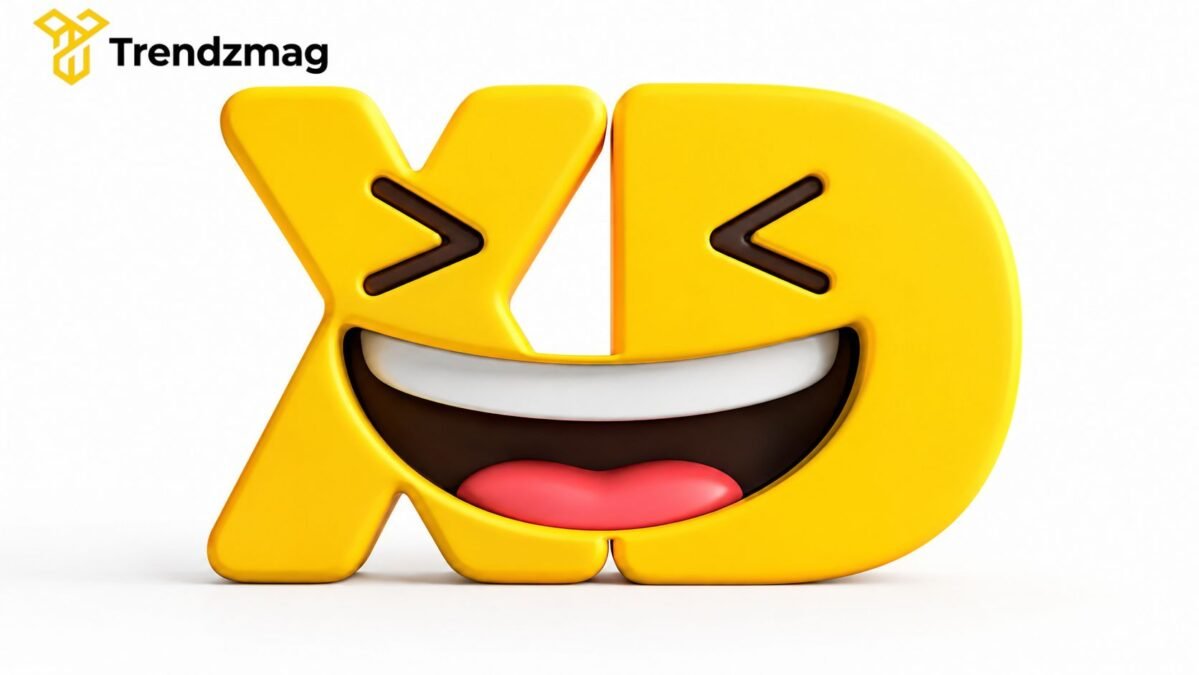
The letters create a face when viewed sideways. The X represents closed or squeezed eyes, often linked with laughing hard. The D represents a wide open smiling mouth. Together, XD looks like a laughing face.
For example, if someone says, “I just spilled coffee on my notebook XD,” they are probably laughing at the situation rather than being seriously upset. The expression softens the message and makes it feel casual.
Why XD Looks Like a Face
XD belongs to the older family of text emoticons. Before modern emojis became common, people used keyboard characters to show emotions. Smileys like 🙂 and 😀 helped users add tone to plain text.
XD works in the same way. The expression depends on visual imagination. It does not use a picture, but it creates the idea of a face through letters. This is one reason people remember it easily.
The shape is simple, quick to type, and easy to recognize. Even users who do not use XD often can usually understand that it points to laughter or excitement.
The Origin of XD
The exact first use of XD is difficult to prove because internet slang often grows naturally across chat rooms, forums, games, and messaging platforms. However, XD became especially popular during the early internet era, when people spent time on forums, instant messengers, online games, and fan communities.
Before smartphones made emojis easy to access, users needed fast ways to show emotion. Text emoticons were perfect for that. They used common keyboard characters and worked across almost every device.
XD became popular because it felt stronger than a simple smile. It showed bigger laughter than 🙂 and more visual personality than “lol.” Over time, it became part of internet culture.
XD and Internet Culture
The xd meaning is closely connected to early online culture. People used it in gaming chats, anime forums, meme communities, social media comments, and casual conversations. It became a shared sign of humor among internet users.
For many people, XD brings back memories of older digital spaces. It reminds them of messaging friends after school, joining online communities, or laughing in multiplayer game chats.
That nostalgia is one reason XD still survives. It feels familiar. It has a personality that many modern emojis do not fully replace.
Why People Still Use XD
People still use XD because it is fast, expressive, and friendly. It takes only two characters, but it can change the tone of a sentence completely. Without XD, a message may look plain or serious. With XD, the same message can feel warmer and more playful.
For example:
“I forgot my own password again.”
This sentence may sound frustrated. But:
“I forgot my own password again XD”
Now it sounds funny and self-aware. The expression tells the reader not to take the message too seriously.
That small emotional signal is powerful in online communication.
XD vs LOL
Many people compare XD with LOL because both are used to show laughter. However, they do not always feel the same.
LOL means “laughing out loud,” but in modern texting, it is often used casually. Sometimes people type LOL even when they are not truly laughing. It can simply make a message feel softer.
XD feels more visual. It shows a laughing face rather than just saying that someone is laughing. Because of that, XD often feels more playful, goofy, or expressive.
Both are useful, but they create slightly different moods.
XD vs Emojis
Emojis have changed online communication. Today, people can send laughing faces, crying-laughing emojis, smileys, stickers, and animated reactions. Still, XD has not disappeared.
The reason is simple: XD has a different feeling. Emojis are polished and visual, while XD feels more old-school and personal. Some users prefer it because it looks casual and less formal than a standard emoji.
XD also works well in places where emojis may feel too colorful or distracting. It blends naturally into text and keeps the conversation simple.
XD in Text Messages
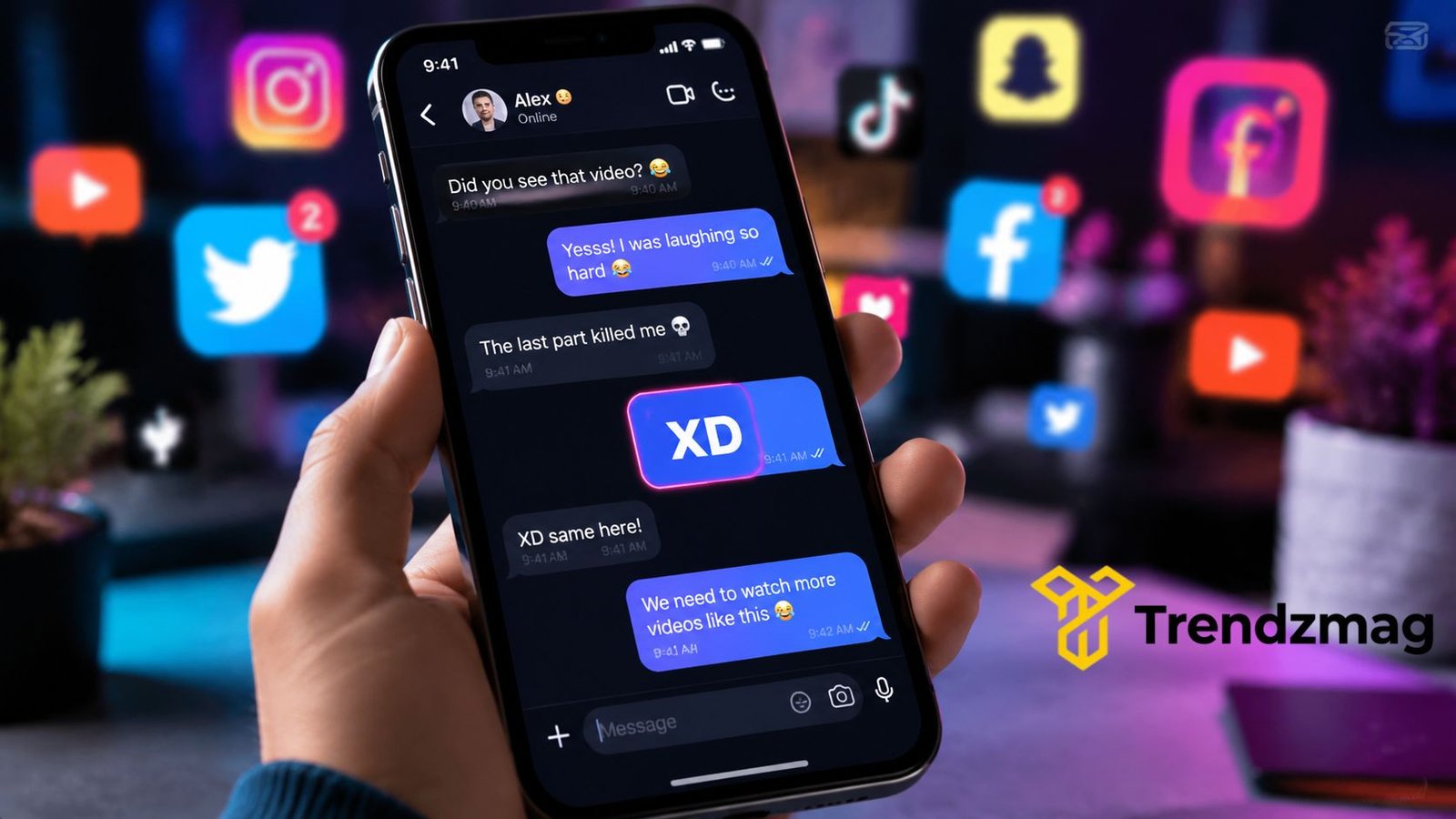
In texting, XD is mostly used between friends, classmates, online friends, or people who already share a casual tone. It is not usually used in serious or formal conversations.
A person may use XD after a joke, a funny mistake, a sarcastic comment, or a playful confession. It helps show that the message is not meant to be harsh.
For example:
“That was the worst joke I’ve ever heard XD”
Here, XD makes the sentence feel teasing rather than rude. It adds emotional context.
XD on Social Media
On social media, XD often appears in comments, captions, replies, and meme discussions. People use it when reacting to funny videos, awkward moments, or relatable posts.
Even though many platforms offer reaction buttons, users still type expressions like XD because they feel more personal. A typed reaction can show personality in a way that a simple like button cannot.
XD also fits naturally in meme culture. Memes are often informal, exaggerated, and humorous, which matches the tone of XD very well.
XD in Gaming
Gaming communities have played a big role in keeping XD alive. In fast-moving game chats, players often use short expressions to react quickly. XD is perfect for that because it is easy to type during gameplay.
A player might type XD after a funny mistake, an unexpected win, or a silly moment during a match. It keeps the mood light and helps players connect through humor.
In gaming spaces, XD can also show friendly teasing. It lets others know that the message is meant as a joke, not an insult.
Common Uses of XD
The xd meaning can change slightly depending on context, but it usually connects to humor or light emotion. People often use it in situations like jokes, memes, playful teasing, funny mistakes, casual storytelling, and online reactions.
For example:
“I tried to cook dinner and almost burned the pan XD”
This shows embarrassment mixed with humor. The person is laughing at themselves.
Another example:
“You really believed that? XD”
This can sound playful if used between friends. However, tone matters. Without a close relationship, it could feel mocking.
Is XD Outdated?
Some people think XD is outdated because it became popular before modern emoji culture. Younger users may prefer emojis, reaction images, or short slang like “lol,” “lmao,” or “dead.”
However, outdated does not mean useless. Many expressions from early internet culture still appear today because they are familiar and easy to understand. XD may not be as trendy as it once was, but it still has a place in casual online language.
In fact, some people use XD because it feels intentionally retro. It can add charm to a message.
Why Millions Recognize XD
One reason XD remains widely recognized is its simplicity. It does not depend on a specific app, keyboard, or device. Anyone can type it using basic letters.
It also crosses language barriers better than many words. Even if someone does not speak English fluently, they may still understand XD as a laughing face because it is visual.
This makes XD useful in global online communities where people from different countries communicate through simple digital expressions.
The Emotional Role of XD
Text messages can easily be misunderstood because they do not include voice, facial expression, or body language. A short sentence may sound serious even when the writer meant it as a joke.
XD helps solve this problem. It adds emotional tone. It tells the reader, “This is funny,” “I am joking,” or “I am being playful.”
That emotional clarity is one of the biggest reasons people continue to use internet expressions like XD. They make written communication feel more human.
When XD Works Best
XD works best in relaxed conversations. It is suitable for texting friends, commenting on funny posts, chatting in games, reacting to memes, or joining casual online discussions.
It is also useful when you want to make a message feel less serious. If you are joking, teasing gently, or sharing a funny mistake, XD can help the reader understand your tone.
The key is context. If the conversation already feels casual, XD fits naturally. If the conversation is serious, it may feel out of place.
When to Avoid XD
XD should usually be avoided in professional emails, business messages, formal documents, serious discussions, or sensitive conversations. In those spaces, it may look too casual or immature.
For example, using XD in a job application or client email would not be appropriate. It could make the message seem less professional.
It is also better to avoid XD when someone is sharing sad, stressful, or personal news. Even if you mean well, the expression may seem careless in serious moments.
Common Misunderstandings
Not everyone reads XD in the same way. Some people see it as friendly and funny. Others may see it as childish, outdated, or sarcastic. This depends on age, culture, platform, and personal texting style.
Tone also matters. XD after a friendly joke can feel warm. XD after criticism can feel rude or mocking.
That is why it is important to know your audience. If the person understands your humor, XD can work well. If not, a clearer response may be better.
XD in Different Age Groups
Older internet users who grew up with forums, chat rooms, and instant messaging may feel more familiar with XD. For them, it may carry nostalgia and comfort.
Younger users may understand XD but use it less often. Many prefer emojis, GIFs, or newer slang. Still, XD appears in many online spaces because internet language often moves in cycles. Older expressions can become popular again when people use them ironically or affectionately.
This gives XD a lasting quality.
Why XD Feels Personal
Unlike a standard emoji selected from a keyboard, XD feels typed by hand. That small difference can make it seem more personal. It shows effort, even if the effort is tiny.
Some people like XD because it feels less polished. It has a rough, old-internet charm. It reminds users that online communication does not always need to be perfect or formal.
That simple human feeling is part of why the expression continues to survive.
XD and Digital Identity
The way people type online often becomes part of their digital personality. Some users love emojis. Some prefer lowercase messages. Some use “lol” often. Others still use XD.
These choices help create tone and identity. When someone uses XD regularly, it may show that they enjoy playful, relaxed, or nostalgic communication.
In this way, XD is not just an expression. It is also a small style choice.
The Future of XD
XD will probably not disappear completely. It may continue to be used less in mainstream texting compared to emojis, but it will remain part of internet language.
Classic expressions often stay alive because people enjoy them, remember them, and bring them back in new ways. XD is simple enough to survive across platforms and generations.
As long as people need quick ways to show laughter in text, XD will still have value.
Conclusion
The xd meaning is easy to understand: it represents laughter, amusement, and playful emotion. The X looks like closed laughing eyes, while the D looks like a wide open smile. Together, they create a simple but memorable laughing face.
Millions still use XD because it is quick, expressive, nostalgic, and easy to recognize. It adds warmth and humor to plain text, helping people communicate tone more clearly.
While emojis and modern reactions have changed digital conversations, XD remains a classic part of internet culture. It may be old-school, but it still has personality, and that is exactly why people continue to use it.
Frequently Asked Questions
What is the meaning of XD in texting?
XD is a text-based emoticon that represents laughter or amusement. The “X” symbolizes closed eyes, while the “D” forms a wide smiling mouth, creating a laughing face.
Is XD the same as LOL?
Not exactly. LOL means “laughing out loud,” while XD visually represents a laughing expression. Both show humor, but XD often feels more playful and expressive.
Do people still use XD in 2026?
Yes, many people still use XD in casual conversations, gaming chats, social media comments, and online communities. Although emojis are more common today, XD remains popular among many internet users.
When should I use XD in a message?
You can use XD when reacting to a joke, funny story, meme, or lighthearted situation. It helps show that your message is friendly and not meant to be taken too seriously.
Is XD appropriate for professional communication?
No, XD is generally best reserved for informal conversations. In business emails, workplace discussions, or formal messages, it is better to use professional language instead.