
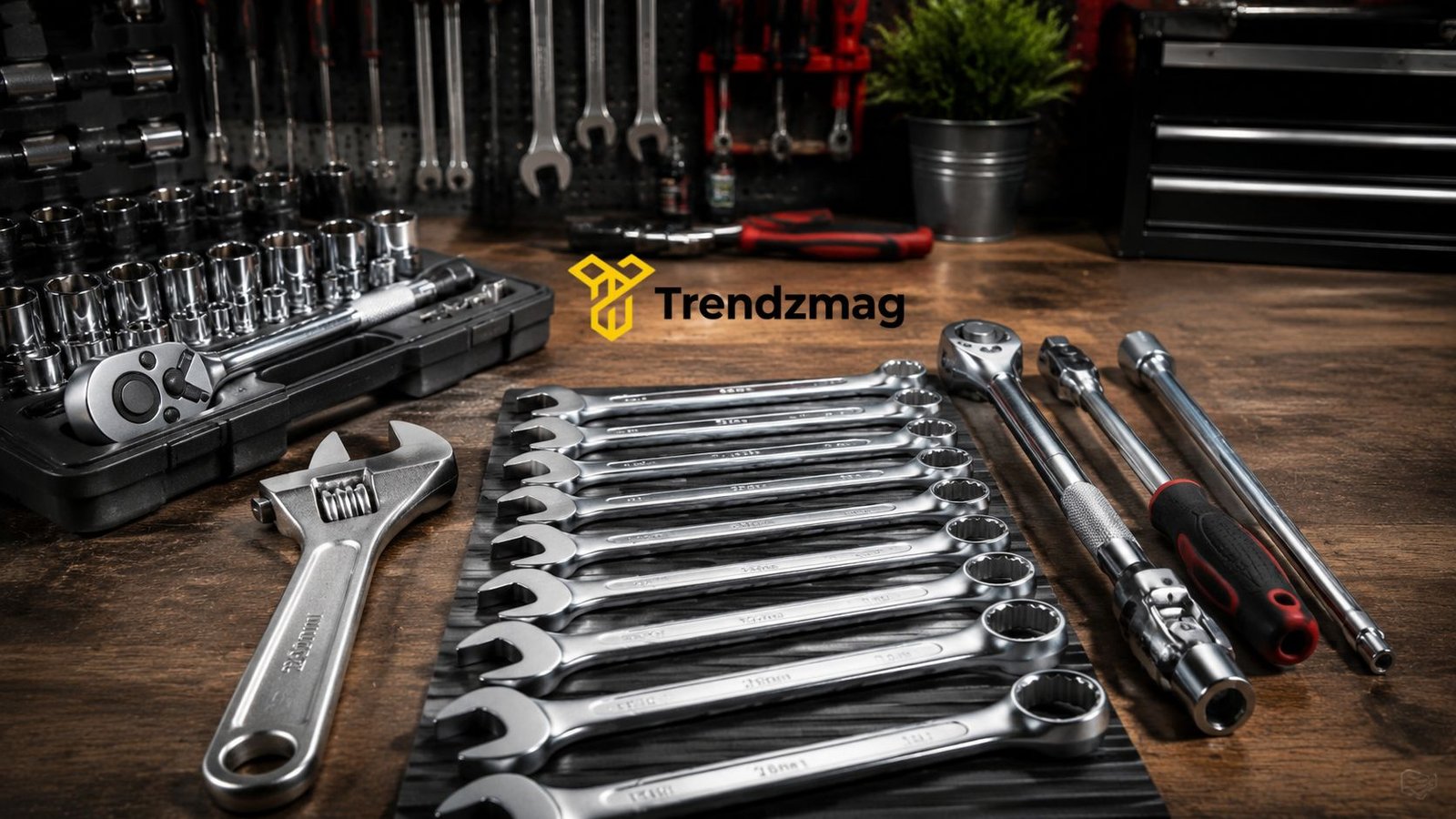
A wrench is one of those tools that almost everyone has seen, but not everyone fully understands. It looks simple, yet it plays an important role in home repairs, automotive work, plumbing, construction, furniture assembly, and countless mechanical jobs. Whether you are tightening a loose bolt under a sink or working on a car engine, the right wrench can make the job easier, safer, and more accurate.
Many people think one wrench is enough for every task, but that is rarely true. Different jobs require different shapes, sizes, grips, and levels of force. Using the wrong wrench can damage fasteners, hurt your hands, or make a simple repair much harder than it needs to be.
This guide explains what a wrench is, the main types, how to choose the right one, how to use it safely, and how to keep your tools in good condition.
BIO
| Label | Information |
|---|---|
| Tool Name | Wrench |
| Tool Type | Hand Tool |
| Main Purpose | Tighten and loosen fasteners |
| Common Uses | Repairs, maintenance, assembly |
| Works With | Nuts and bolts |
| Popular Types | Adjustable, socket, torque, pipe |
| Measurement Systems | Metric and SAE |
| Key Benefit | Provides grip and leverage |
| Common Materials | Steel and alloy steel |
| Skill Level | Beginner to professional |
| Maintenance | Clean, dry, and store properly |
| Safety Tip | Use the correct size wrench |
| Typical Users | Homeowners, mechanics, plumbers |
What Is a Wrench?
A wrench is a hand tool designed to grip, turn, tighten, or loosen fasteners such as nuts and bolts. It gives the user mechanical advantage, which means it helps apply more turning force than the hand alone could provide.
In simple words, a wrench helps you turn something that is too tight, too small, or too difficult to move by hand. The longer the handle, the more leverage it can provide. This is why larger wrenches are commonly used for heavy-duty work, while smaller ones are better for light repairs and tight spaces.
In some countries, especially the United Kingdom, a wrench is often called a spanner. In the United States and many other places, the word wrench is more commonly used.
Why a Wrench Matters
A wrench may seem like a basic tool, but it can make a major difference in the quality of your work. A good wrench fits the fastener properly, grips firmly, and allows controlled movement. This prevents rounded bolt heads, slipping, and unnecessary damage.
For homeowners, a wrench can help with common repairs such as fixing furniture, adjusting bicycles, replacing plumbing fittings, or tightening loose hardware. For mechanics and tradespeople, it is an everyday tool used for precise and demanding work.
The right wrench saves time. It also reduces frustration because you are not fighting with a tool that does not fit the job.
Types of Wrenches
There are many kinds of wrenches, and each one is made for a specific purpose. Understanding the main types helps you choose the best tool for your project.
Adjustable Wrench
An adjustable wrench has a movable jaw that can be changed to fit different fastener sizes. This makes it useful when you do not know the exact size of the nut or bolt.
It is a popular choice for home toolkits because it can handle many basic jobs. However, it must be adjusted carefully. If the jaw is loose, the wrench can slip and damage the fastener.
Combination Wrench
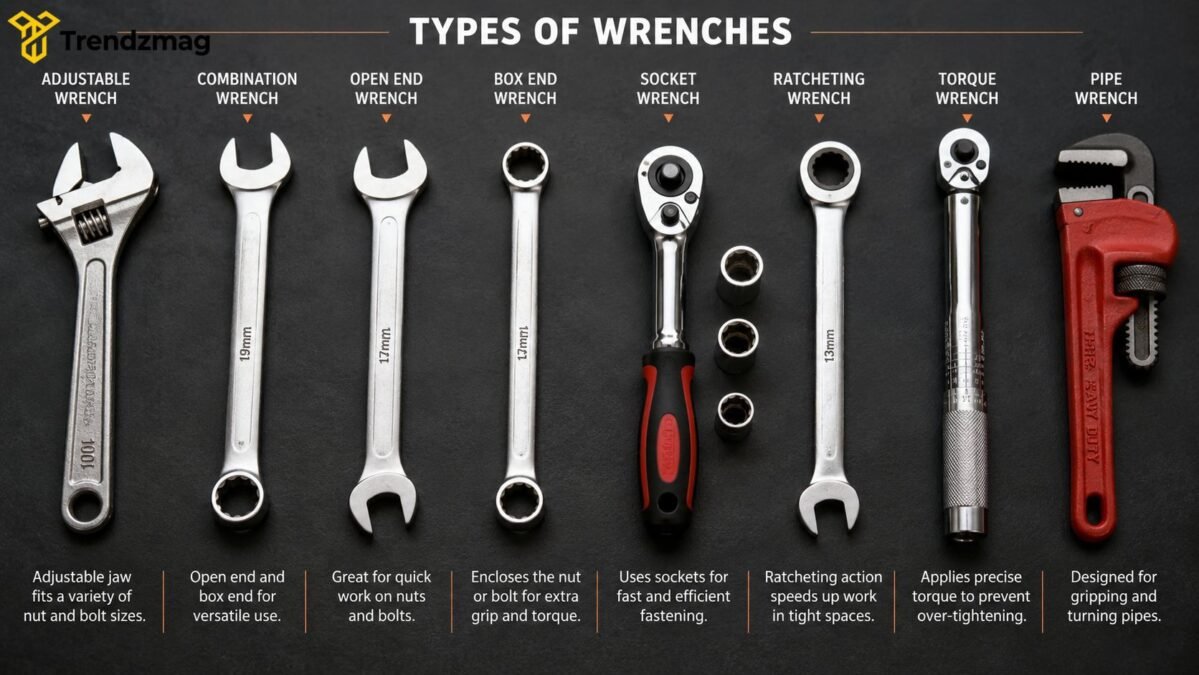
A combination wrench has two different ends. One side is open-ended, while the other side is closed or box-shaped. The open end is useful for quick access, while the box end provides a stronger grip.
This type is common in automotive repair, machinery work, and general maintenance. Many tool sets include several combination wrenches in different sizes.
Open-End Wrench
An open-end wrench has U-shaped jaws that grip two sides of a nut or bolt. It is helpful when there is not enough space to slide a closed wrench over the fastener.
The main advantage is speed and access. The downside is that it does not grip as securely as a box-end wrench, so it should be used carefully on tight or stubborn bolts.
Box-End Wrench
A box-end wrench fully surrounds the fastener. This gives better grip and reduces the chance of slipping. It is especially useful when a bolt is tight or slightly worn.
Box-end wrenches often have 6-point or 12-point openings. A 6-point wrench gives stronger contact, while a 12-point wrench is easier to position in tight spaces.
Socket Wrench
A socket wrench uses removable sockets that fit over nuts and bolts. It usually has a ratcheting handle, allowing the user to turn the fastener without removing and repositioning the tool after every movement.
Socket wrenches are very useful for automotive work, furniture assembly, machinery repair, and jobs where many fasteners need to be tightened or loosened.
Torque Wrench
A torque wrench is designed for precision. It allows the user to tighten a fastener to a specific torque value. This is important in automotive, bicycle, machinery, and engineering work where bolts must not be too loose or too tight.
Overtightening can damage parts, while undertightening can make them unsafe. A torque wrench helps avoid both problems.
Pipe Wrench
A pipe wrench is made for gripping round objects, especially metal pipes and plumbing fittings. It has strong serrated jaws that bite into the surface for a firm hold.
This wrench is powerful but should not be used on polished or delicate surfaces because the teeth can leave marks.
Allen Wrench
An Allen wrench, also called a hex key, is a small L-shaped or T-shaped tool used for hex socket screws. It is common in furniture assembly, bicycles, electronics, and machinery.
Allen wrenches are simple, compact, and often sold in sets with multiple sizes.
Ratcheting Wrench
A ratcheting wrench works like a combination wrench but includes a ratcheting mechanism. This allows the user to tighten or loosen a fastener without lifting the wrench off after each turn.
It is especially helpful in tight spaces where hand movement is limited.
How to Choose the Right Wrench
Choosing the right wrench depends on the job, the fastener, the working space, and the amount of force needed.
First, look at the fastener size. A wrench must fit properly. If it is too loose, it may slip and round the edges of the nut or bolt. If it is too small, it will not fit at all.
Second, consider the working area. In open spaces, a socket wrench or long-handled wrench may work well. In narrow areas, a short wrench, open-end wrench, or ratcheting wrench may be better.
Third, think about force. For light household repairs, a basic wrench set is usually enough. For stubborn bolts, automotive work, or heavy-duty repairs, you may need a stronger wrench with better leverage.
Wrench Sizes Explained
Wrenches usually come in two main measurement systems: metric and SAE.
Metric sizes are measured in millimeters, such as 8 mm, 10 mm, 13 mm, or 17 mm. They are commonly used on many modern vehicles, bicycles, appliances, and imported products.
SAE sizes are measured in inches, such as 1/4 inch, 3/8 inch, 1/2 inch, or 3/4 inch. These are common in older equipment and some American-made products.
Using the wrong system can cause a poor fit. A wrench that seems “close enough” may still slip under pressure. For best results, use the correct size and measurement type.
Common Uses for a Wrench
A wrench is useful in many everyday and professional tasks.
In automotive repair, wrenches are used for battery terminals, engine parts, wheels, brackets, and under-hood maintenance. Mechanics often use combination wrenches, socket wrenches, and torque wrenches.
In plumbing, pipe wrenches and adjustable wrenches help tighten or loosen pipes, fittings, and valves. These tools are essential when dealing with water lines and fixtures.
In furniture assembly, Allen wrenches and small adjustable wrenches are often used to connect frames, legs, shelves, and brackets.
In bicycle maintenance, wrenches help adjust brakes, pedals, seats, wheels, and handlebars. Torque wrenches are especially useful for modern bikes with lightweight components.
In home repairs, a wrench can tighten loose handles, repair garden equipment, adjust appliances, and fix small mechanical issues.
How to Use a Wrench Properly
Using a wrench correctly is not difficult, but small mistakes can lead to damaged tools or injuries.
Always choose the correct size first. The wrench should sit firmly on the fastener with little movement. If it feels loose, try another size.
Place the wrench fully onto the nut or bolt before applying pressure. A partial grip increases the chance of slipping.
Whenever possible, pull the wrench toward you instead of pushing it away. Pulling gives better control and reduces the chance of your hand striking a hard surface if the wrench slips.
Apply steady pressure rather than sudden force. If a fastener is stuck, use penetrating oil, wait a few minutes, and try again. Forcing the tool too hard may break the fastener or damage the wrench.
Common Wrench Mistakes
One common mistake is using an adjustable wrench without tightening the jaw properly. A loose jaw can slip and round the fastener.
Another mistake is using a wrench as a hammer. A wrench is not designed for striking. Hitting with it can damage the tool and create safety risks.
Some people also use a pipe or extension over the wrench handle to gain extra leverage. This can be dangerous because it may overload the wrench or snap the fastener.
Using the wrong size is another major issue. A slightly incorrect wrench may seem to work at first, but it can damage the fastener under pressure.
Finally, many people ignore worn tools. A wrench with damaged jaws, cracks, or heavy rust should not be trusted for serious work.
Wrench Safety Tips
Safety should always come first when using hand tools.
Check the wrench before use. Make sure the jaws are not bent, cracked, or badly worn. A damaged wrench can slip suddenly.
Keep your hands dry and free from oil or grease. A slippery grip makes the tool harder to control.
Avoid using excessive force. If a bolt will not move, find the cause instead of simply pulling harder. Rust, cross-threading, or wrong tool size may be the real problem.
Wear gloves when working on rough metal or heavy repairs, but make sure they do not reduce your grip too much.
Also, keep your work area clean. Small tools, loose bolts, and clutter can create unnecessary hazards.
Wrench Maintenance
A good wrench can last for many years if it is maintained properly.
After use, wipe the wrench clean with a dry cloth. If it has grease or dirt on it, use a mild cleaner and dry it fully before storage.
Keep wrenches in a toolbox, drawer, or organizer. Leaving them outside or in damp areas can lead to rust.
For adjustable wrenches, keep the moving jaw clean. Dirt inside the adjustment mechanism can make the tool harder to use.
Light oil can help protect metal surfaces from corrosion, especially if the tools are stored in a humid place.
Inspect your wrench set from time to time. Replace any tool that has damaged jaws, deep cracks, or serious wear.
Beginner Wrench Set
A beginner does not need every wrench type right away. A practical starter set should include a few basic tools that cover common tasks.
A good starting point includes an adjustable wrench, a set of combination wrenches, a socket wrench set, and Allen keys. These tools can handle many home repairs, furniture projects, bicycle adjustments, and light mechanical tasks.
For people who work on cars, adding a torque wrench is a smart decision. It helps tighten important bolts correctly and avoids damage caused by guessing.
For plumbing work, a pipe wrench is useful, but it should be used only where its strong serrated jaws are appropriate.
Professional Use of Wrenches
In professional settings, wrenches are more than basic tools. They are part of precise and repeated work.
Mechanics depend on wrenches for engine service, suspension work, brake repair, and maintenance. Plumbers use them for pipe systems and fittings. Construction workers use them for structural connections, equipment assembly, and site repairs.
In industrial environments, the right wrench can affect safety and performance. Fasteners that are not tightened properly can cause equipment failure. That is why professionals often use torque tools, high-quality wrench sets, and strict inspection routines.
For professional work, durability matters. Strong materials, accurate sizing, comfortable grips, and corrosion resistance all become important.
Buying Tips
When buying a wrench, do not look only at price. A cheap wrench may work for light jobs, but it may wear quickly or fit poorly.
Look for clean machining, strong metal, comfortable handling, and clear size markings. A wrench should feel solid in the hand, with no rough edges or weak points.
For adjustable wrenches, check that the jaw moves smoothly and stays firmly in place.
For socket wrenches, make sure the ratchet mechanism feels smooth and strong.
For torque wrenches, choose one that matches the torque range needed for your projects. A tool used far outside its ideal range may not give reliable results.
Frequently Asked Questions
What is the most commonly used type of wrench?
The adjustable wrench is one of the most commonly used types because it can fit various nut and bolt sizes. It is a practical choice for general household repairs and maintenance tasks.
How do I know which wrench size to use?
Choose a wrench that fits the fastener snugly without any looseness. Using the correct size helps prevent slipping and protects the nut or bolt from damage.
Can I use an adjustable wrench instead of a wrench set?
An adjustable wrench can handle many basic jobs, but it cannot replace a complete wrench set. Fixed-size wrenches provide a more secure grip and better performance for demanding tasks.
What is the difference between a wrench and a socket wrench?
A standard wrench grips the sides of a fastener directly, while a socket wrench uses removable sockets and a ratcheting handle. Socket wrenches are often faster and more efficient for repetitive work.
How should I maintain my wrench?
Keep your wrench clean and dry after each use. Store it in a toolbox or organizer, inspect it regularly for wear, and apply light oil when needed to help prevent rust.
Final Thoughts
A wrench is simple in appearance, but it is one of the most useful tools you can own. From small household repairs to professional mechanical work, it helps tighten, loosen, adjust, and secure important parts.
The key is choosing the right wrench for the job. An adjustable wrench is useful for general tasks, a combination wrench offers dependable grip, a socket wrench saves time, and a torque wrench provides accuracy when precision matters.
Good technique is just as important as the tool itself. Use the correct size, apply steady pressure, avoid shortcuts, and keep your wrench clean and well maintained.
With the right wrench and a little care, many repair jobs become easier, safer, and more satisfying.